
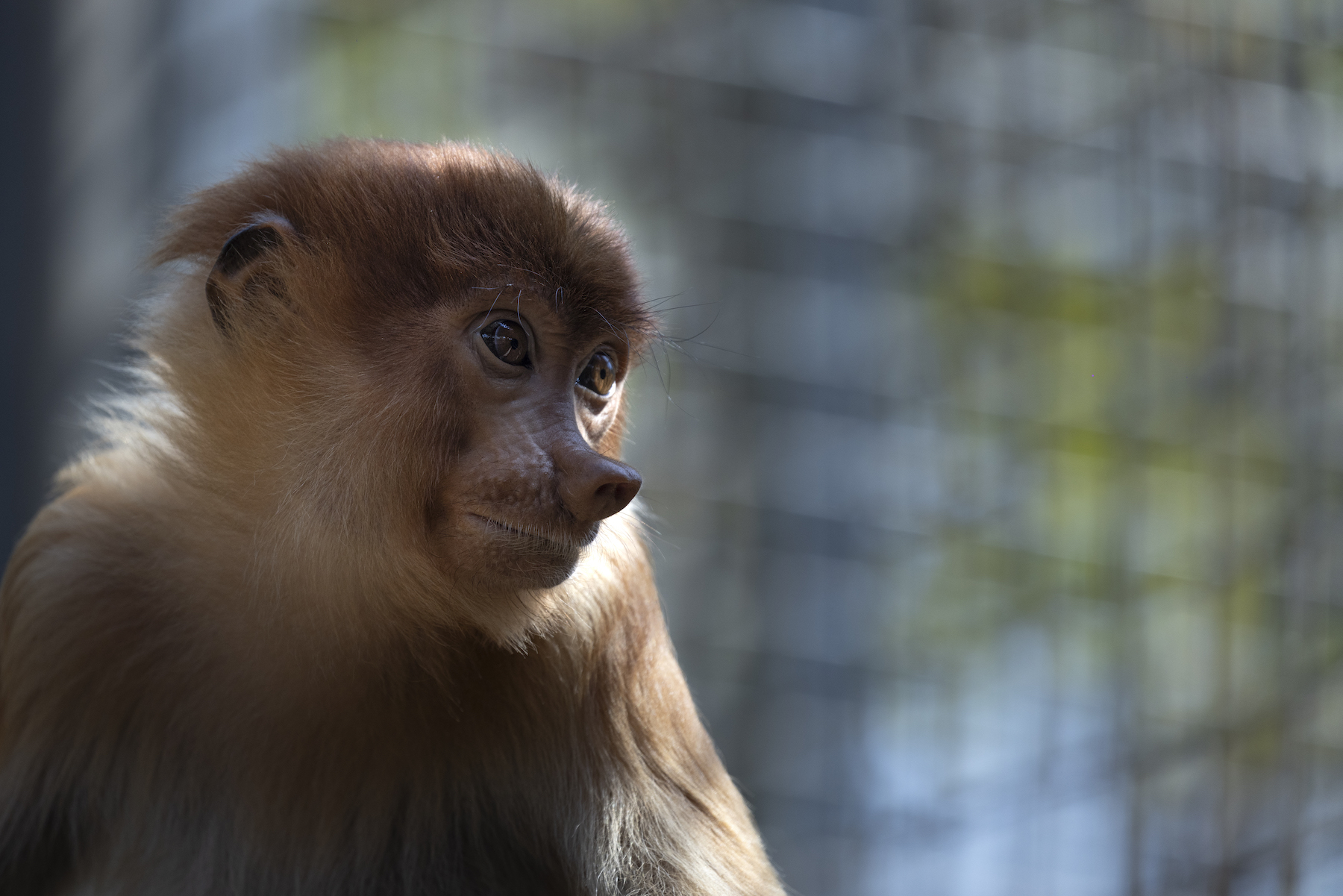
Some conservation stories begin with hope. Others begin with loss. And then there are the rare ones—like this—that begin with something troubling, but still manage to give us a reason to keep going.
On Jan 6 2026, in central Thailand, an injured proboscis monkey was found near a railway track, far from where it should ever have been. This is a species that belongs exclusively to Borneo—to its mangrove forests, its winding rivers, its fragile ecosystems. Seeing one alone, hurt, and displaced in another country is not just unusual. It’s a sign that something has gone very wrong.
And yet, this story doesn’t end there.
The monkey was rescued. People stepped in. It received care. And now, it’s recovering.
That matters.
Because in a world where wildlife trafficking often operates in the shadows—quiet, efficient, and devastating—any interruption is significant. Every rescued animal is a life pulled back from a system that too often goes unchecked. And in this case, the rescue did more than save one individual: it triggered an investigation into the networks that moved it across borders in the first place.
That’s where this becomes more than just a rescue story. It becomes a moment of resistance.
Let’s be clear: this should never have happened. The presence of a proboscis monkey in Thailand is almost certainly the result of illegal wildlife trafficking. These animals are not adapted to survive outside their native habitats, and the journey alone—capture, transport, confinement—is often traumatic or fatal. Most victims of this trade are never found. They disappear into private collections, roadside zoos, or worse.
So yes, this is a terrible case.
But it’s also a rare point of light.
Because someone noticed. Someone cared enough to act. And authorities took it seriously enough to look deeper.
In primate conservation, wins don’t always look like sweeping victories. They don’t always come with headlines about populations rebounding or forests fully restored. More often, they look like this: one animal saved, one case investigated, one small disruption in a much larger system.
It’s easy to feel overwhelmed by the scale of the challenges. Habitat loss continues. Illegal trade persists. Many primate species, including the proboscis monkey, remain endangered. In that context, a single rescue can feel like a drop in the ocean.
But drops matter.
They ripple outward. They remind us that intervention is possible. That systems, however entrenched, can be challenged. That individuals—both human and non-human—are not entirely powerless.
This story is not the end of anything. The trafficking networks behind it are likely still active. Countless other animals are still at risk. There is, without question, a great deal of work left to do.
But for one monkey, on one railway track, the story changed direction.
And sometimes, that’s exactly where meaningful progress begins.
Leave a Reply