
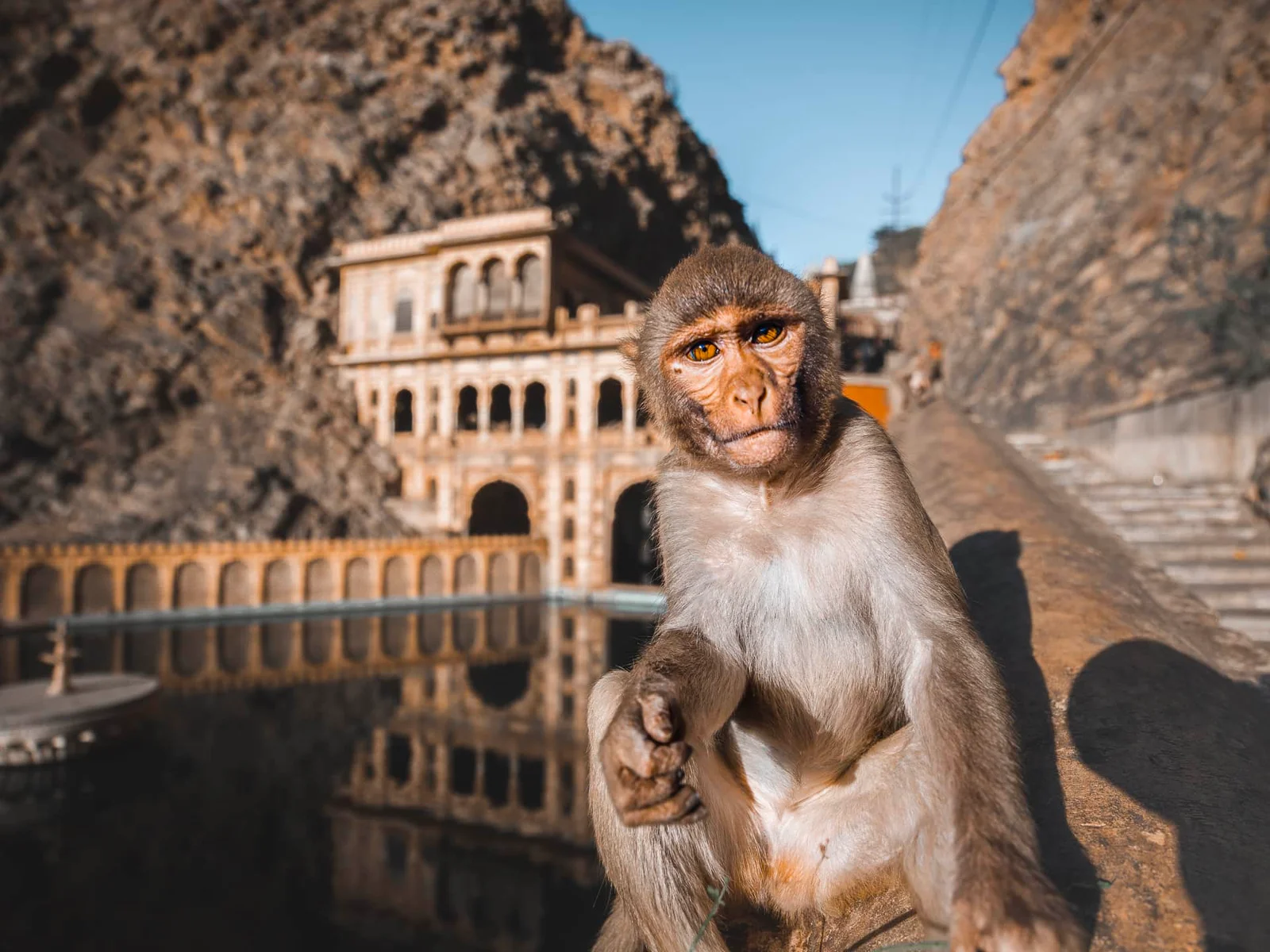
In many parts of South Asia, sharing space with wildlife isn’t unusual—it’s a daily reality. Few animals embody this coexistence more vividly than the rhesus macaque.
From the crowded streets of Delhi to temple complexes in Nepal, rhesus macaques have learned not just to survive alongside humans, but to thrive. And in many ways, we’ve helped them do it.
Historically, this relationship has been shaped by culture as much as ecology. In Hindu traditions, monkeys are often associated with Hanuman, a revered figure symbolizing strength and devotion. Feeding monkeys, especially near temples, became an act of religious merit. Over generations, this created a steady, predictable food source—something wild animals rarely have.
As cities expanded, macaques adapted quickly. They learned traffic patterns, figured out how to open containers, and began exploiting new food sources—from crops to garbage to snacks snatched directly from people’s hands. In many urban areas, they are now a permanent feature of the landscape.
But coexistence isn’t always peaceful.
Today, human–macaque interactions can be tense. Property damage, crop raiding, and occasional bites have led to frustration and, in some cases, conflict. Urban growth has reduced natural habitats, pushing macaques further into human-dominated spaces. At the same time, provisioning—intentional or not—continues to support large populations.
Efforts to manage this relationship have evolved. Authorities have experimented with relocation, sterilization programs, and public education campaigns aimed at reducing feeding. Some cities are even redesigning waste systems to make them less accessible to wildlife.
And yet, despite the challenges, there’s something remarkable about this coexistence. It’s messy, imperfect, and sometimes strained—but it has endured for centuries.
Rhesus macaques remind us that conservation isn’t always about separating humans from nature. Sometimes, it’s about learning how to live together—adapting our behaviors as much as we expect animals to adapt theirs.
The future of this relationship will depend on balance: respecting cultural traditions while finding sustainable ways to reduce conflict. It’s not easy. But it’s possible. And in many places, it’s already happening.
Leave a Reply