
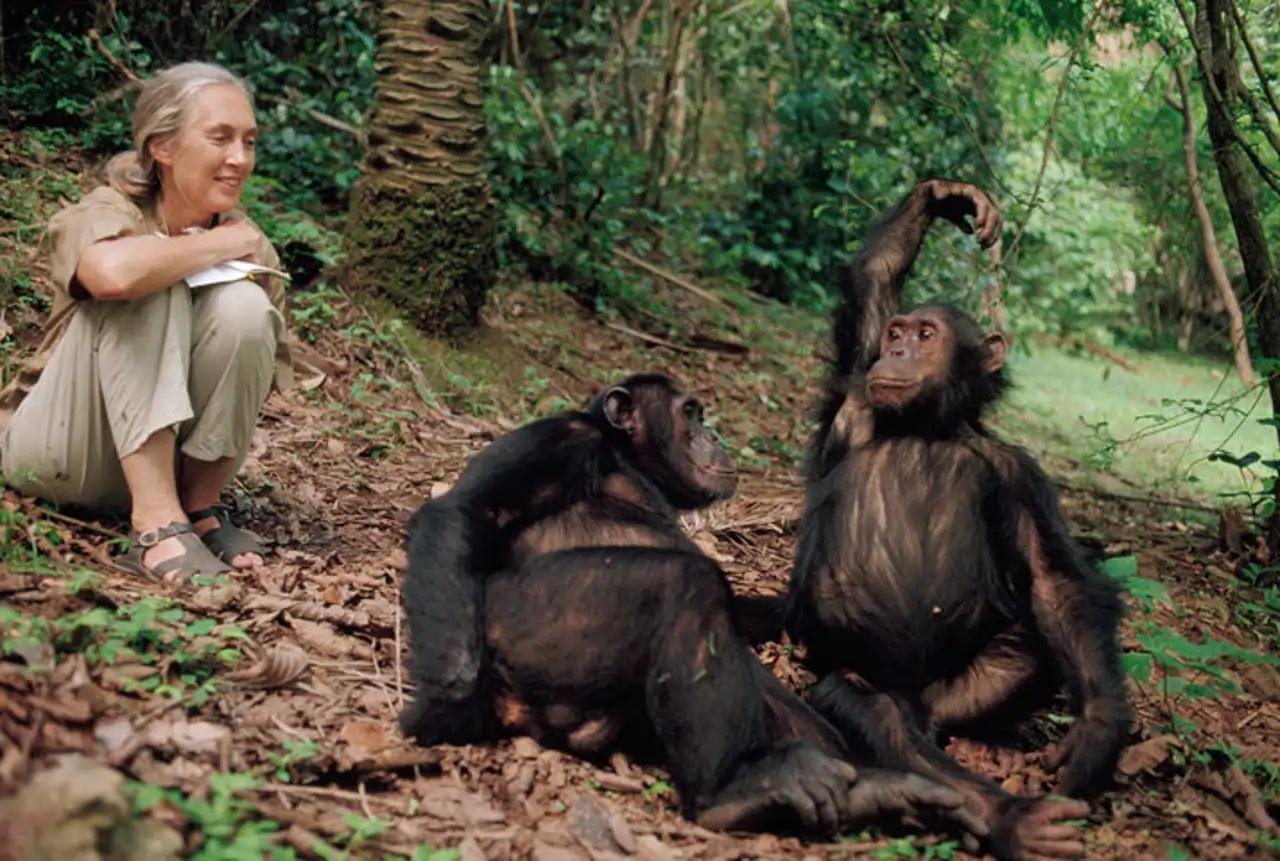
Few wildlife stories have seeped into popular culture quite like the chimpanzees of Gombe Stream National Park. You’ve probably heard the headlines: chimps wage war, form alliances, show kindness—and cruelty. But how much of that is actually true?
It all began in 1960, when Jane Goodall arrived on the shores of Lake Tanganyika with little formal training but a lot of patience. What she found changed science. Within months, she observed chimpanzees using tools—stripping leaves off twigs to “fish” termites. At the time, tool use was thought to be uniquely human. Overnight, the definition of what it meant to be human had to be reconsidered.
Over the following years, Goodall documented rich social lives: grooming rituals, maternal care, friendships, and rivalries. Chimps weren’t just animals reacting to instinct—they were individuals with personalities.
Then came the darker chapter.
Between 1974 and 1978, researchers at Gombe witnessed what is now known as the Gombe Chimpanzee War. A once-unified community split into factions, and over several years, members of one group systematically attacked and killed members of the other. It was shocking—and it quickly became a cultural touchpoint. The idea that our closest relatives were capable of organized violence resonated deeply.
But pop culture often simplifies. Yes, chimpanzees can be aggressive. They patrol territories, form coalitions, and sometimes engage in lethal conflict. But that’s only one part of the picture. They also reconcile after fights, adopt orphans, and maintain long-term social bonds that are essential for survival.
So the truth is more nuanced: chimpanzees are neither peaceful caricatures nor miniature humans at war. They are complex, adaptable primates shaped by ecology, social structure, and opportunity—just like us.
Decades later, the Gombe chimps are still teaching us. Long-term data from the site has helped scientists understand aging, disease, cooperation, and even the roots of human behavior. It’s one of the longest-running field studies in the world—and one of the most important.
The fascination isn’t misplaced. But the real story is richer than the myth. And far more human, in all the best—and hardest—ways.
Leave a Reply