
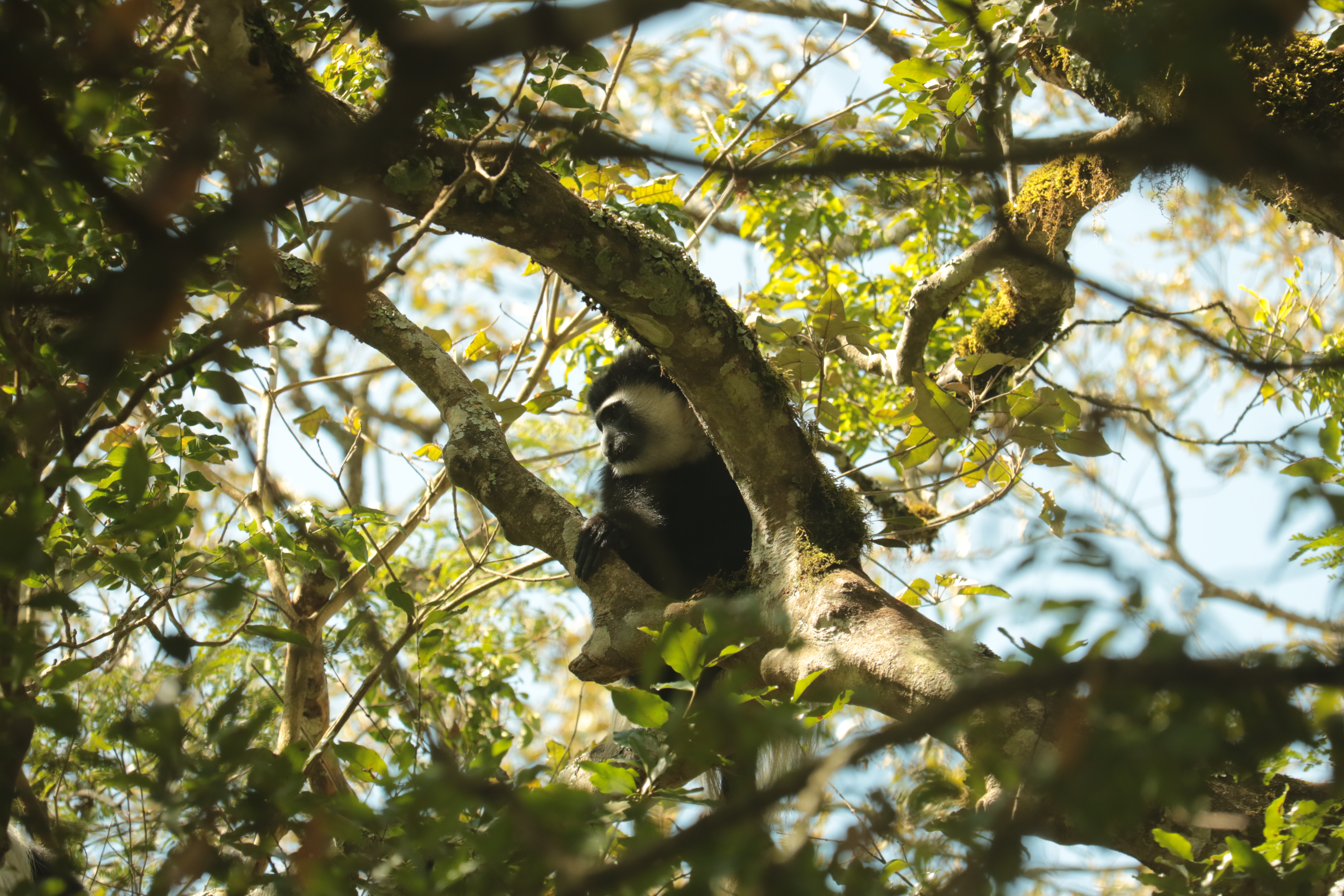
High on the slopes of the world’s tallest freestanding mountain, draped in flowing black-and-white fur like living works of art, the Guereza colobus (Colobus guereza) moves silently through the ancient montane forests of Kilimanjaro National Park. While most visitors arrive with their eyes fixed on the summit, those who pause in the forest zone below are rewarded with one of Africa’s most visually stunning primates.
The colobus monkeys of Kilimanjaro inhabit the lush rainforest belt that wraps around the mountain between roughly 1,800 and 2,800 metres. This dense, mossy forest — rich with giant fig trees, Podocarpus, and wild olive — provides everything the colobus needs: shade, shelter, and an abundant supply of leaves. Unlike most primates, colobus monkeys are specialist folivores, meaning leaves make up the bulk of their diet. A uniquely chambered stomach allows them to digest tough, often toxic foliage that other animals cannot.
Family troops of 10 to 15 individuals move through the canopy with quiet elegance, their long white mantles and sweeping tails making them instantly recognisable. They are largely peaceful animals, spending much of the day resting and digesting — a necessary consequence of a low-energy, leaf-based diet.
Yet even here, on the slopes of an iconic World Heritage Site, the colobus faces pressure. The forests of Kilimanjaro are shrinking due to agricultural encroachment, illegal logging, and the creeping effects of climate change, which is altering the mountain’s delicate ecological zones. Drying conditions threaten the very forest belt the colobus calls home.
Conservation efforts within the national park, combined with community education programmes in surrounding villages, offer hope. But the long-term survival of Kilimanjaro’s colobus depends on protecting the forest that cloaks the mountain’s base — the part of Kilimanjaro that most people never stop to notice.
Leave a Reply